GNS Wholesale Stationers: streamlining catalog production with Pagination

Founded in New South Wales in 1964, GNS Wholesale Stationers has grown to become one of Australia’s largest distributors of stationery, office supplies, toys, home goods, and gifts. GNS supports stationery retailers, resellers, and suppliers by offering competitive products and coordinated marketing initiatives.
Today, GNS employs over 260 people and serves thousands of businesses, helping them compete with larger retail chains by offering reliable supply chain solutions and promotional events. Through its warehouses in Sydney, Brisbane, Melbourne, and Perth, GNS offers fast, cost-efficient delivery services nationwide.
The company manages an extensive product portfolio, frequent promotional campaigns, and constant catalog updates. For this reason, GNS recognized the need for an automated solution to improve catalog production.
The challenge: managing large catalogs and ensuring brand consistency
GNS faced three key challenges:
- Streamlining catalog production: The company needed a faster, more efficient way to produce its catalogs. Frequent updates and promotional campaigns made it difficult to keep catalogs manually updated.
- Managing a wide range of SKUs: The catalog publishing process covered thousands of products, each with multiple attributes and color variants. Although the catalogs relied on a standardized product layout, manually updating all descriptions, attributes, and product options was time-consuming and repetitive.
- Handle different brands: Each catalog included items from multiple brands, each of which required specific logos and graphical elements. Adding these elements to each product page was increasing the complexity of manual updates.

Pagination’s solution: catalog automation with auto break and white space optimization
Pagination addressed GNS’s challenges with an automated solution that combined catalog production automation, automatic white space distribution, and seamless static content integration.
Automated catalog production
- Product data integration: Pagination connects directly to GNS’s PIM export, which contains structured product information. This file is enriched with additional attributes such as brand logos, section codes, and promotional highlights. By merging product data to InDesign, every element of the catalog can be automatically populated, reducing the need for manual editing and ensuring precision across thousands of SKUs.
- Automated section covers and indexes: Each catalog section can be assigned with a different color code directly in the data file. Pagination automatically generates dividers and chapter covers, complete with images, titles, and sub-sections. The same color coding system is also applied to the index, providing an intuitive navigation structure and helping resellers find the right products quickly.
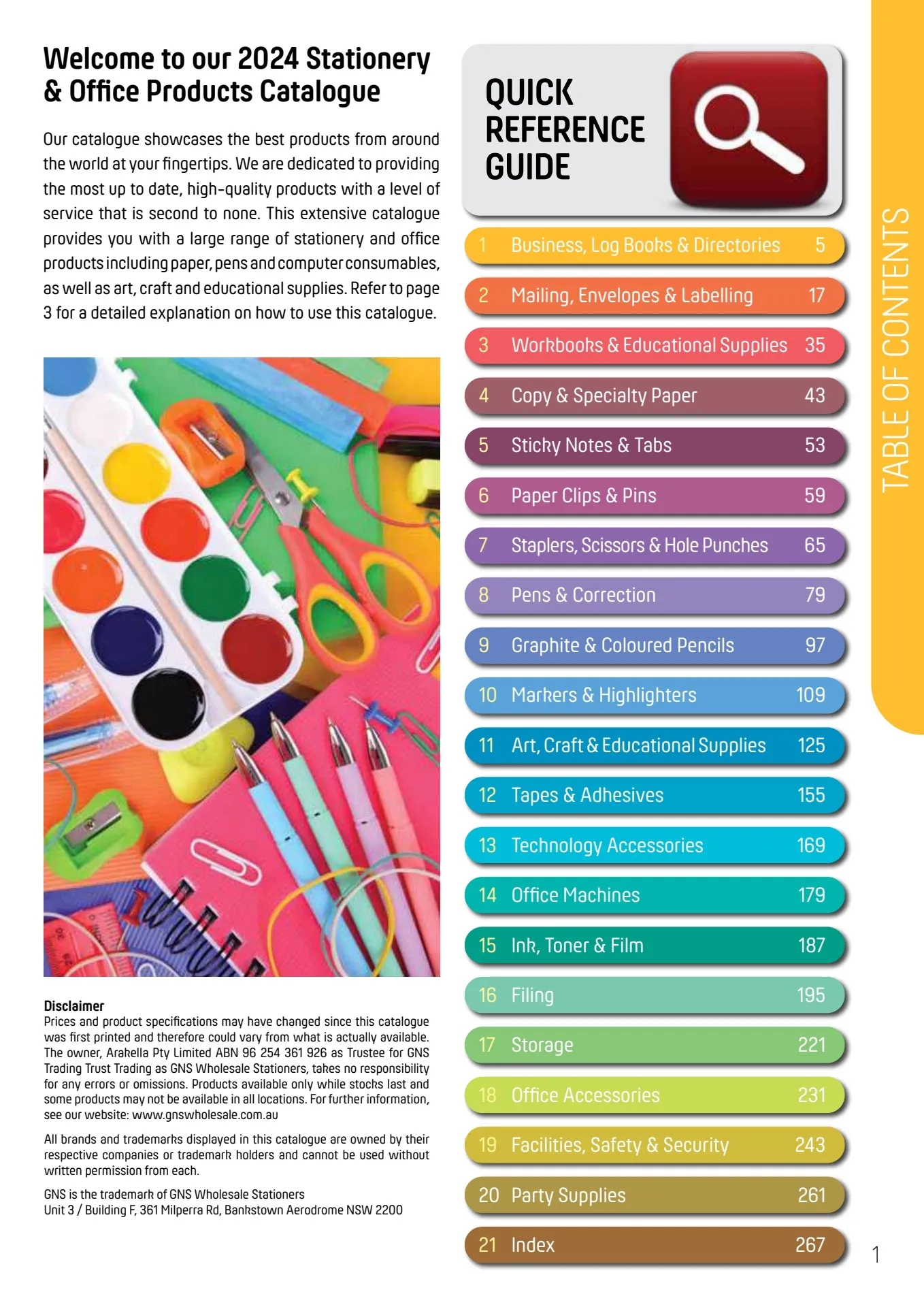
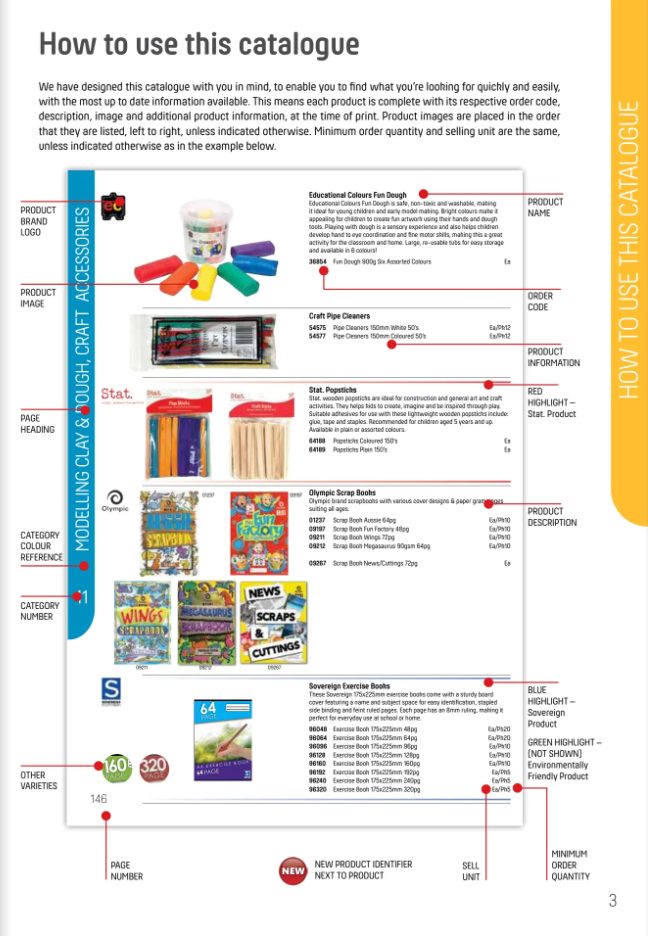
- Flexible product layout: GNS adopted a single product layout, which can be mirrored (with the image on the left or on the right) to create visual variety. The layout displays the product image, name, description, and a table of variants. Thanks to color variants, different types of products can be visually differentiated while maintaining brand coherence.
- Brand logos: Logos of the various brands distributed by GNS are automatically placed next to their corresponding products. This eliminates the need for manual placement and ensures the representation of all brands, regardless of catalog size or frequency of updates.
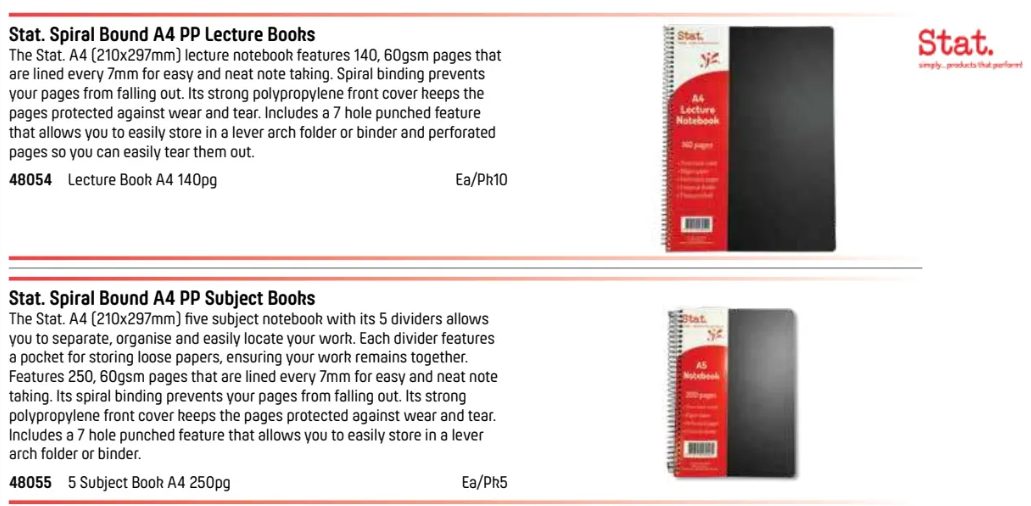
- Auto break: GNS can indicate in the data file when to insert a page break, so when the product needs to be included in a new page. In this way, they have full control over the content on a single page.
- Static and dynamic page merging: GNS often needs to include pre-designed advertising pages in their catalogs. With Pagination, these static PDFs can be inserted directly into the automated workflow. Since the placement is defined in the data file, there was no need for manual merging. The catalogs seamlessly combined dynamic content generated from the data with static pages, producing a unified and professional result in a single publishing process.
White space optimization
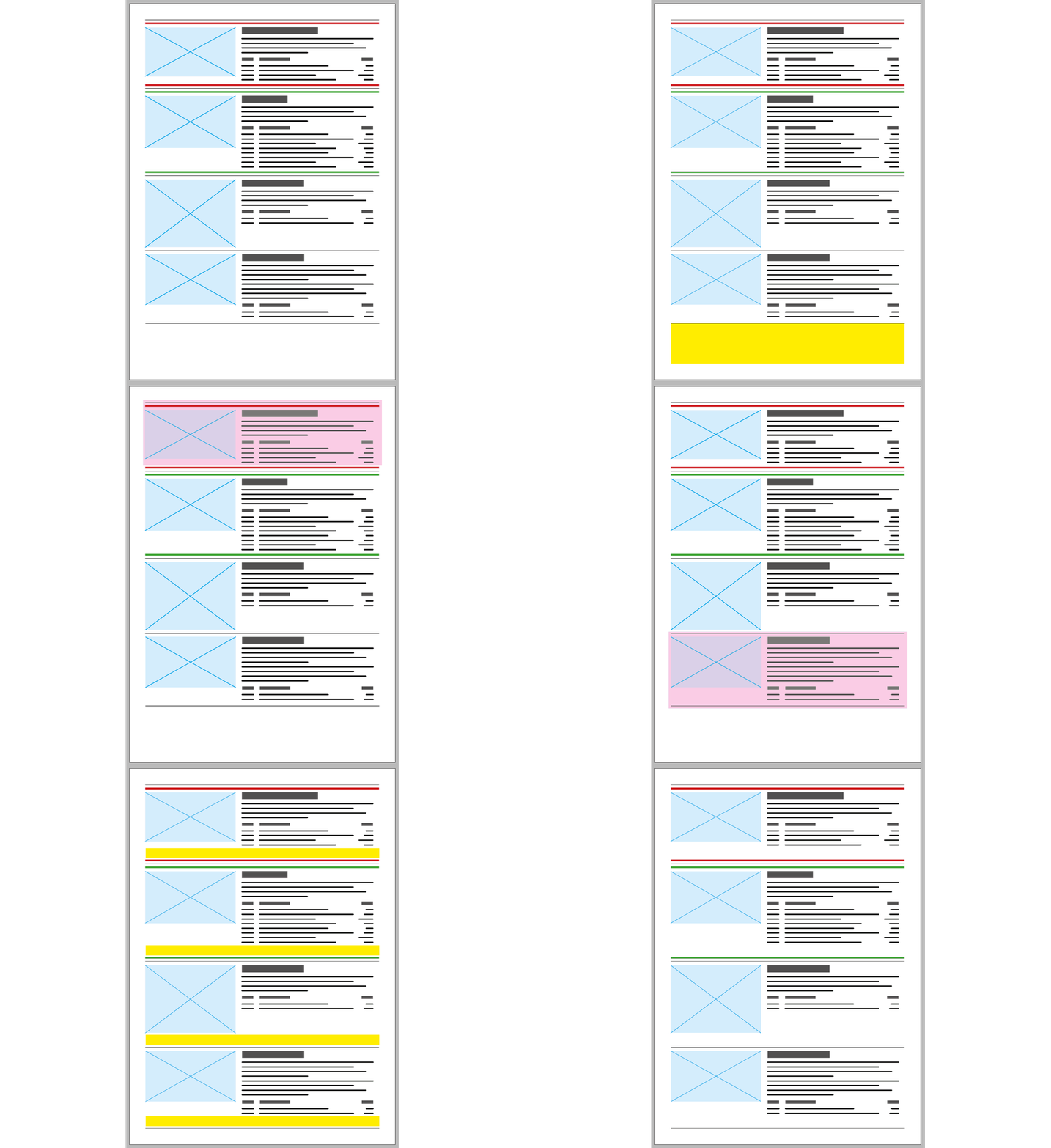
One of GNS’s most significant challenges was maintaining balanced layouts, particularly when product descriptions or image sizes varied. Manual adjustments to white space consumed considerable time and often disrupted the overall design flow.
To solve this, Pagination developed a custom script that automates automatic white space distribution across every page. The objective was to preserve readability, respect branding elements, and deliver a professional catalog.
The script follows these guidelines:
- Grouping elements: The script scans every element on a page, grouping each product (text and images) with the line(s) present above its title. This ensures the space distribution doesn’t disrupt the visual cues indicating brand-specific or new products.
- Even space distribution: Leveraging InDesign’s distribute element function, the script evenly spaces out these grouped product elements between the page margins.
- Single product evaluation: We introduced a condition in the script to assess if a page contains only one product. If so, the script recognizes that distributing space is unnecessary and skips that page, maintaining the intended design.
Results and Benefits
By adopting Pagination’s catalog automation solution, GNS transformed a slow, repetitive process into a streamlined, reliable workflow.
- Time savings: What once required weeks of manual adjustments can now be completed in a fraction of the time.
- Brand consistency: Automatic placement of logos, product highlights, and section colors ensures uniformity across catalogs.
- Flexibility: GNS can easily adjust content by updating the data file, leveraging auto break to control pagination and structure.
- Professional design quality: Thanks to automatic white space distribution, every page achieves an elegant, balanced look without requiring manual fine-tuning.
- Scalability: With the ability to manage thousands of SKUs, integrate new product lines, and reuse the same catalog maker workflow for multiple promotions, GNS is now equipped to handle increasing publishing demands.
Key takeaways
GNS’s partnership with Pagination shows how InDesign automation can transform publishing workflows in the stationery and office supply industry. The implementation delivered measurable improvements across multiple areas:
- Operational efficiency: Automated workflows eliminated repetitive manual tasks, enabling GNS to update and release catalogs much faster while reducing production costs.
- Flexible design: A single InDesign template supported different product layouts, complete with color variants, promotional highlights, and brand logos.
- Layout consistency: Automatic white space distribution ensured every page maintained a balanced and professional appearance, regardless of product content.
- Structured publishing: With the auto break function, GNS could easily insert product, category, and document breaks directly from the data file, keeping catalogs structured and easy to navigate.
- Content integration: The ability to merge static pages with dynamic content allowed pre-designed ads to be seamlessly incorporated without manual adjustments.
- Reliable automation: Using Pagination’s catalog software, GNS can now make a catalog faster, cheaper, and with consistent quality compared to traditional methods.
For wholesalers, retailers, and distributors seeking to simplify catalog production, Pagination’s database publisher offers the automation tools needed to create professional, ready-to-publish documents efficiently.
Ready to experience the benefits of automation for your business? Contact Pagination today or watch our demo to learn more.
Create your automated document!
Use one of our free InDesign Templates or upload your own layout. Create documents anytime and from anywhere.