By 2026, over 80% of decision-makers have tested generative AI tools, and McKinsey reports that marketing and sales teams are leading adoption. Countless tools now promise to automate document creation: but when it comes to complex, structured outputs like product catalogs, can AI really deliver?
At Pagination, we’ve spent 15 years automating catalog production for international clients. So naturally, we asked ourselves: is there such a thing as an AI catalog maker?
Short answer: not really. Some tools can generate catalog-like documents from prompts, but they lack the accuracy, structural logic, and scalability of purpose-built automation. A tailored catalog automation system handles layout variations, product hierarchies, pricing rules, and localization in ways that generic AI tools still can’t.
To understand why, it helps to look at how catalogs are actually produced at scale.
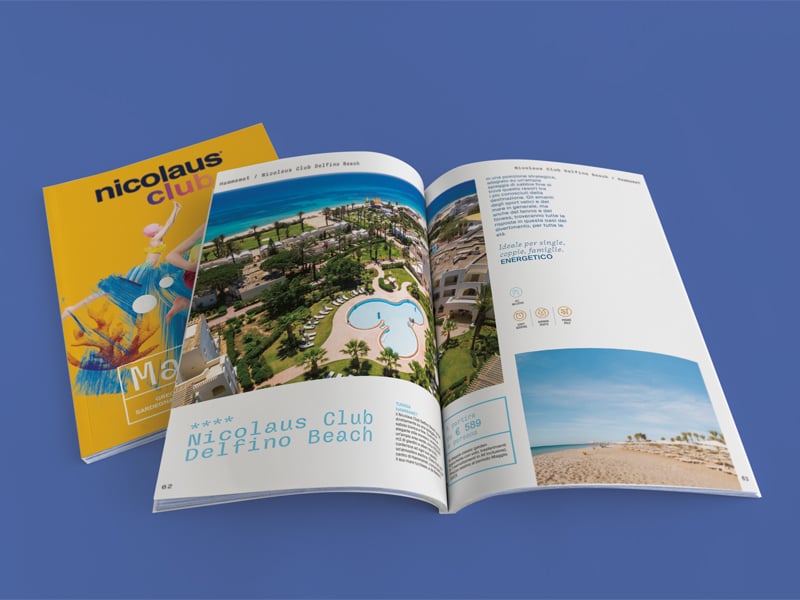
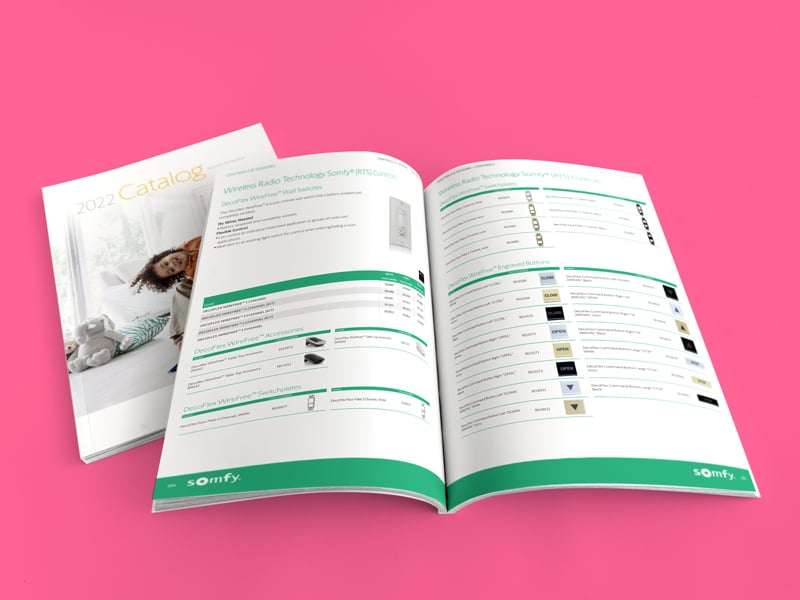
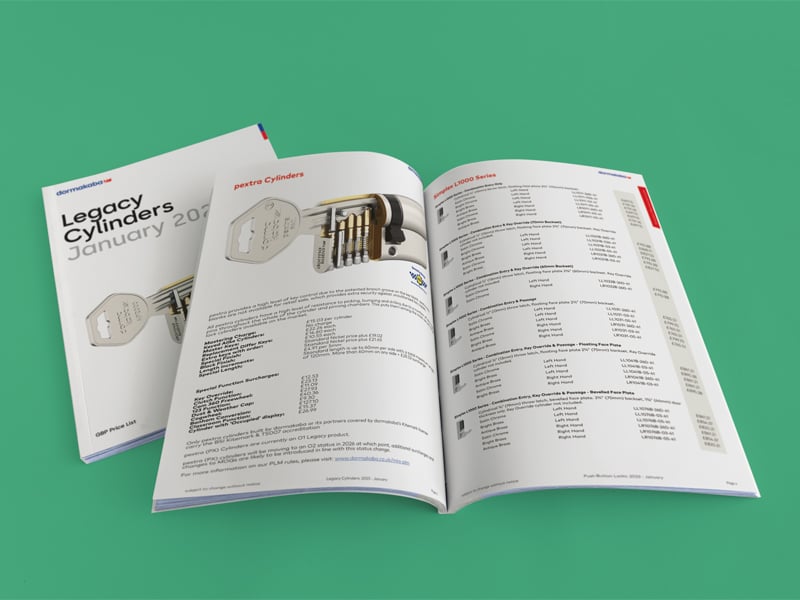
A production catalog is not just a collection of text and images. It is a highly structured document governed by precise rules: page dimensions, grids, typography, product hierarchies, pricing logic, conditional layouts, indexes, and cross-references that must remain consistent across hundreds or thousands of pages.
These requirements turn catalog creation into an engineering problem, not a creative one. The system generating the document must measure space, resolve layout constraints, and recompute pagination deterministically every time the data changes. This is fundamentally different from generating content based on patterns or probabilities.
In this article, we explore what AI can (and can’t) do for catalog creation, and why automation remains the most reliable solution for production-scale documents.
Table of Contents
AI vs Automation
As AI tools gain visibility, we’ve seen “AI” and “automation” used interchangeably, even though they refer to fundamentally different technologies. Understanding this distinction is essential for anyone exploring solutions for document production.
Artificial Intelligence (AI)
Artificial Intelligence refers to systems that simulate human cognitive functions, such as learning, reasoning, and problem-solving, to perform tasks that typically require human intelligence.
Unlike traditional software, AI systems are capable of interpreting data, identifying patterns, and adapting to new situations.
According to IBM, AI is “a field which combines computer science and robust datasets to enable problem-solving” and includes subfields such as machine learning and natural language processing.
Key characteristics of AI include:
- Pattern recognition
- Decision-making
- Problem resolution
- Continuous learning from data
In short, AI doesn’t just follow rules; it interprets information and evolves based on it.
Automation
Automation, on the other hand, is the use of technology to perform predefined tasks with minimal or no human input. It relies on structured instructions and fixed logic to execute repetitive processes efficiently and consistently.
Unlike AI, automation does not involve learning or adaptation. It excels in scenarios where the task is well-defined, repetitive, and requires high reliability. This makes it ideal for structured document production, batch processing, and other rule-based workflows.
That said, the two approaches are not mutually exclusive: AI can complement automation in meaningful ways, especially in specific stages of catalog creation.
The key difference between AI and automation is determinism.
Automation systems are designed to produce the same output from the same input, every time. This is critical for catalogs, where a single layout change can shift page numbers, break tables of contents, invalidate indexes, or cause costly print errors.
Generative AI systems, by contrast, are probabilistic by nature. They are excellent at producing plausible results, but they cannot guarantee identical pagination, layout stability, or reproducible outputs across large, data-driven documents.
How can AI help me with the creation of a product catalog?
This doesn’t mean AI has no role in catalog creation. On the contrary, AI can significantly improve specific steps of the workflow — especially those that involve interpretation, enrichment, or creative input.
What AI cannot replace is the publishing engine itself: the system responsible for layout logic, pagination, and production consistency. That role still belongs to automation.
While AI can’t create complete catalogs autonomously, it excels at specific workflow tasks:
Product Images
In most product catalogs, images have white or transparent backgrounds to ensure visual consistency. But many companies don’t have clean, background-free images available. RemoveBG uses AI to detect the main subject of an image and remove the background automatically, helping speed up visual preparation.
Creating eye-catching product visuals for catalog covers or hero sections can be resource-intensive. Stylized is an AI-powered tool that generates stylized product images from simple text prompts. It allows marketers to produce creative visuals without relying on photo shoots or design teams.
Product Information & Text
VueTag by Vue.ai uses AI to extract and enrich product metadata from images and text. It helps standardize catalog descriptions, tag products efficiently, and streamline onboarding for new SKUs. This is especially useful for retail or fashion companies managing large, frequently updated inventories.
For businesses selling in multiple countries, AI-based translation tools can help localize catalog content. Smartling combines Neural Machine Translation with cloud-based language services and can integrate with PIM systems to automate the translation of product descriptions and marketing text across languages.
AI catalog maker: the power of Pagination
Pagination is not an AI catalog generator — it is a production-grade catalog automation platform.
Instead of relying on prompts or probabilistic outputs, Pagination applies explicit layout rules, typographic constraints, and data-driven logic to every document it generates. This guarantees predictable results, even when prices, languages, or product assortments change.
You don’t need generative AI to create fast, high-quality, fully customized catalogs. With Pagination, automation does the heavy lifting: quickly, accurately, and without compromising design or brand consistency.
From handling thousands of SKUs to generating multilingual catalogs and applying custom layout logic, Pagination provides a professional, scalable solution for companies that need complete control over their product documentation. Whether you update prices weekly or produce dozens of market versions, everything can be automated, no AI prompts needed.