A well-crafted B2C product catalog does more than showcase your collection: it inspires customers, drives sales, and strengthens your brand identity. Whether you’re selling fashion, home decor, cosmetics, or electronics, a B2C catalog is your chance to create a tactile or digital experience that connects emotionally with consumers.
In this guide, we’ll walk through the benefits of catalog automation for B2C companies, how to implement it with the right tools, and why Pagination is the go-to solution to simplify the process.
What Is a B2C Product Catalog?
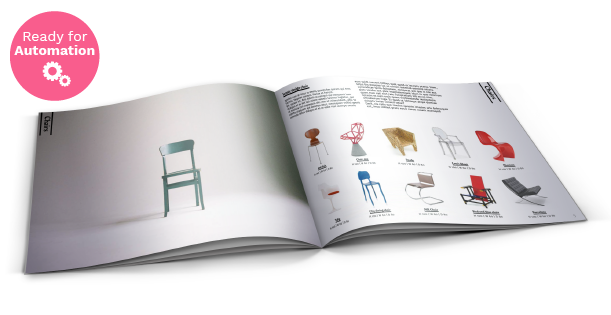
A B2C product catalog is a curated selection of items designed to attract and inspire end consumers. Unlike technical or transactional documents, a B2C catalog focuses on emotional appeal, visual storytelling, and a seamless shopping journey, whether online or offline.
From glossy seasonal lookbooks to compact product guides for retail stores, B2C catalogs come in many formats. But they all share one purpose: to guide customers toward a purchase decision through attractive imagery, well-structured product information, and brand consistency.
Whether printed or digital, your catalog is often the first touchpoint customers have with your products.
B2C vs B2B Catalogs: Different Goals, Different Tools
A B2C catalog is fundamentally different from B2B catalogs. While both are based on structured product data, the way that data is presented, and the purpose it serves, is shaped by the end user.
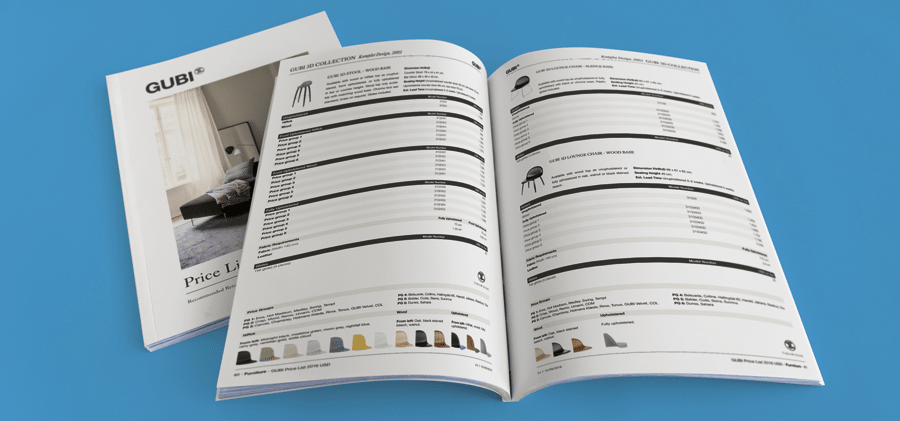
In a B2B context, the catalog is often used by internal teams or professional buyers who need detailed, accurate, and up-to-date information to make informed procurement decisions. It’s a tool for quoting, ordering, and coordinating with logistics or technical departments.
In B2C, the goal is very different. The catalog is a marketing asset, designed to engage, inspire, and spark action. Whether printed or digital, it’s aimed at consumers who browse casually, compare options visually, and respond to emotional cues like lifestyle images, typography, and color.
Here’s how the two compare:
B2B catalogs are functional: precision, specifications, prices, variants, codes. They’re optimized for repeat business, internal processes, and accuracy at scale.
B2C catalogs are persuasive: curated products, compelling visuals, seasonal storytelling. They’re designed to drive attention and action, often across omnichannel experiences.
Both types require structure and consistency, but in B2C, visual design, brand identity, and emotional resonance matter just as much as product information. The software you choose needs to support both dimensions.
The Key Benefits of B2C Catalogs
A B2C catalog does more than display your inventory. When crafted strategically, it becomes an essential marketing asset. Here’s why:
Brand storytelling: Use lifestyle photography, typography, and layout to build a mood and convey brand values.
Customer inspiration: A printed catalog left on a table or a digital flipbook shared via email invites browsing and discovery.
Increased conversions: Clear, structured product details and beautiful visuals reduce friction and drive sales—both online and in-store. You can also create an interactive PDF document, complete with an order form, which customers can use to place orders digitally or provide other information.
Omnichannel consistency: A catalog ensures that what shoppers see online matches what’s in stores, across all campaigns and channels.
With the right tools, your catalog becomes an always-on sales driver, not just a once-a-year project.
Why B2C Catalog Automation Is Important
For B2C brands, catalogs aren’t just product listings—they’re storytelling tools. But updating them manually each season (or even each month) can be exhausting. Automation helps solve these challenges:
Faster updates: Promotions, pricing, and seasonal launches change quickly. Automated catalogs let you publish new versions in minutes.
Consistency across markets: Keep branding, pricing, and translations aligned across all your international editions.
Reduced errors: Eliminate the manual copy-paste steps that cause typos and outdated information.
Instead of spending weeks building your catalog, you can focus on designing a beautiful, on-brand experience—while your data does the heavy lifting behind the scenes.
How to Automate B2C Catalogs with a Catalog Maker
A catalog maker automates the most time-consuming parts of catalog production:
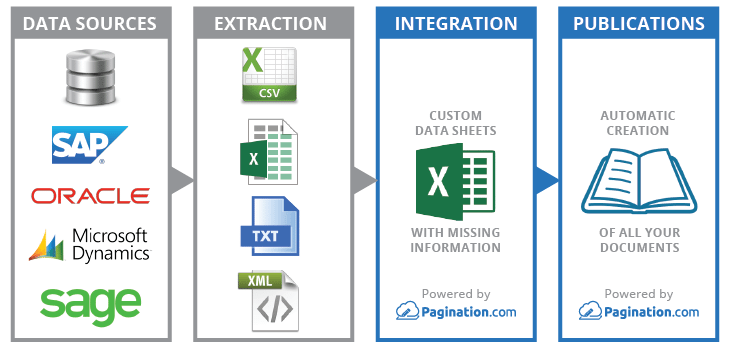
Data import: Pull content from Excel, e-commerce platforms, or your PIM system.
Template design: Define once, reuse forever. Your layout stays consistent, even as content changes.
Fast output: Export to print-ready PDFs or digital editions in just a few clicks.
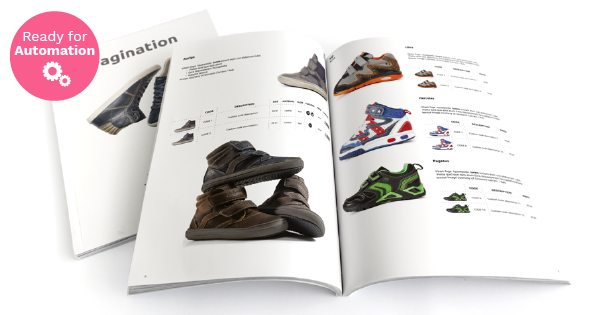
For B2C companies, this means you can create separate catalogs for women’s, men’s, or kids’ collections—each tailored and up to date, without extra work.
What to Look for in Catalog Maker
Choosing the right catalog software is about more than layout automation. You need a platform that integrates with your operations and supports your growth to make a catalog.
Features to prioritize:
Data integration: Connect your product database, ERP, ecommerce, or PIM without reformatting files manually.
Professional output: Ensure the output supports Adobe InDesign for full design control.
Multi-language support: Create multilingual catalogs without duplicating your effort.
Versioning and localization: Support different currencies, product codes, and layouts per market or client.
Team workflows: Allow collaboration between sales, marketing, and design without friction.
Automation: Automate as much of the layout and data merge process as possible.
A great tool adapts to your business’s complexity, not the other way around.
How Pagination Makes B2C Catalogs Easy
Pagination was built to help brands scale catalog creation with minimal effort. Here’s what you can expect:
Flexible design tools: Create visually engaging layouts using Adobe InDesign.
Live data connections: Update product data without touching the layout.
Multiple catalogs at once: Generate seasonal collections, promotional inserts, or outlet-only catalogs in parallel.
Localized versions: Automatically switch images, prices, and copy for different countries or store locations.
Whether you need a monthly catalog or an entire catalog series for a product drop, Pagination adapts to your schedule and your brand.
How to Create a Catalog with Pagination
Here’s what it looks like to build a catalog with Pagination:
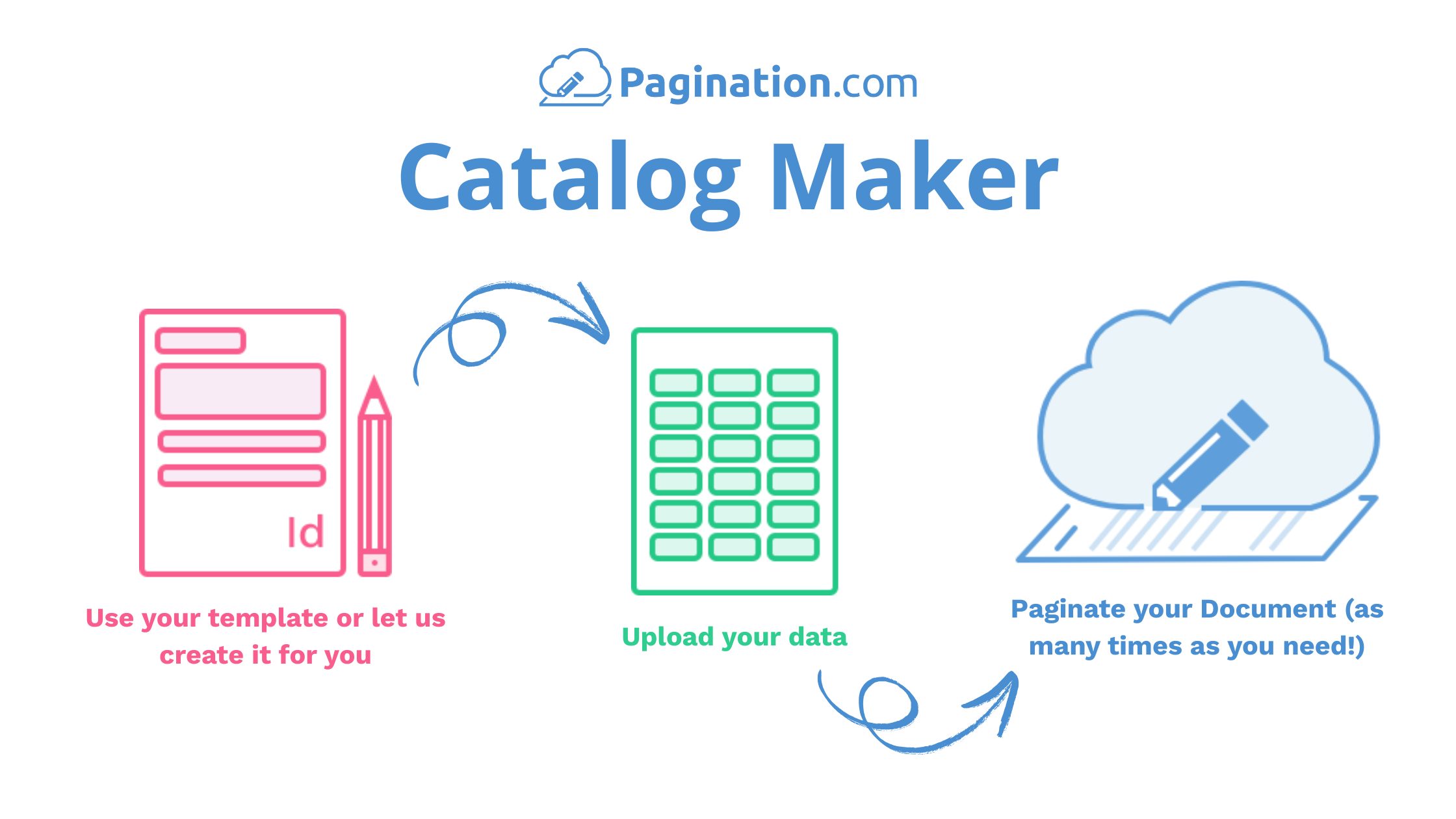
Prepare your data: Upload your product info in Excel or connect directly to your system.
Choose your layout: Use your existing InDesign template or have one tailored to your specs.
Generate your files: Automatically receive both a professional-grade PDF and an editable InDesign file.
Make updates with ease: Upload new data at any time and create a new version without manual rework.
Want to see how it works? Watch the demo and learn more about our catalog maker software.
Share
Catalog automation?
Publishing a product catalog or a price list is a challenging task that can put pressure on even the best marketing teams.
You can use Pagination, the Catalog Software, to automatically create beautiful documents in just a few seconds that are always ready for print or digital distribution.
To provide the best experiences, we use technologies like cookies to store and/or access device information. Consenting to these technologies will allow us to process data such as browsing behavior or unique IDs on this site. Not consenting or withdrawing consent, may adversely affect certain features and functions.
Functional
Always active
The technical storage or access is strictly necessary for the legitimate purpose of enabling the use of a specific service explicitly requested by the subscriber or user, or for the sole purpose of carrying out the transmission of a communication over an electronic communications network.
Preferences
The technical storage or access is necessary for the legitimate purpose of storing preferences that are not requested by the subscriber or user.
Statistics
The technical storage or access that is used exclusively for statistical purposes.The technical storage or access that is used exclusively for anonymous statistical purposes. Without a subpoena, voluntary compliance on the part of your Internet Service Provider, or additional records from a third party, information stored or retrieved for this purpose alone cannot usually be used to identify you.
Marketing
The technical storage or access is required to create user profiles to send advertising, or to track the user on a website or across several websites for similar marketing purposes.