
When you’re evaluating an investment opportunity, having the right documentation at your fingertips can make all the difference in making smart, informed decisions. Two of the most crucial resources you’ll encounter are the financial prospectus and the fund fact sheet. While these documents often work hand in hand, they serve distinctly different purposes in your investment journey. This comprehensive guide will walk you through their definitions, key components, and important differences, empowering both investors and fund managers to navigate the investment landscape with greater confidence. Finally, we’ll explore automation solutions for fund marketing teams.
Overview: Two Essential Investment Documents
Both financial prospectuses and fund fact sheets play vital roles in the financial industry, yet they’re designed for different audiences and serve unique purposes. Think of the financial prospectus as your comprehensive legal roadmap: it’s a detailed document that regulators require when companies offer securities to the public. The fund fact sheet, on the other hand, acts more like a quick reference card: it’s a concise, visually friendly summary that helps you rapidly assess a fund’s key characteristics and recent performance.
Grasping how these two documents work together is crucial for compliance teams, fund marketers, and individual investors who want to stay well-informed about their investment choices.
Financial Prospectus: Definition, Purpose, and Key Components
A financial prospectus serves as the official legal document that companies and asset managers must publish whenever they’re launching new investment products, whether that’s mutual funds, ETFs, stocks, or bonds. Think of it as the “full disclosure” document that ensures complete transparency about the investment opportunity, the company behind it, and all the risks involved.
Here’s what you’ll typically find inside:
- Summary note: a high-level overview of both the offer and the issuer
- Registration document: comprehensive information about the issuing entity, including its financials and governance structure
- Securities note: detailed terms of the offering, covering everything from quantity and price to dividends and listing information
- Risk factors: thorough legal disclosures covering market, credit, operational, and regulatory risks
Take an IPO as an example: when a company goes public, it must release a complete prospectus that lays out its financial health, business model, risk profile, and exactly how it plans to use the funds it raises. This level of detail is absolutely essential for institutional investors and regulators who need to assess whether the offering is viable.
Who Is It For?
The financial prospectus is primarily crafted for:
- Regulatory authorities (such as ESMA, CONSOB, or the SEC)
- Institutional investors who need to conduct thorough due diligence
- Legal and compliance teams responsible for verifying transparency and accuracy of disclosures
Since it’s a formal legal document, you’ll notice that prospectuses tend to use highly technical language and can be quite extensive in their coverage.
When and How It’s Used
You’ll encounter a financial prospectus whenever there’s:
- An Initial Public Offering (IPO)
- A bond issuance
- The launch of new funds regulated under EU directives or similar frameworks
Before any offering can move forward, the relevant authority must approve the prospectus. Additionally, updates become mandatory whenever material changes occur—such as shifts in management, fund strategy, or financial conditions.
Fund Fact Sheet: Definition, Purpose, and Key Components
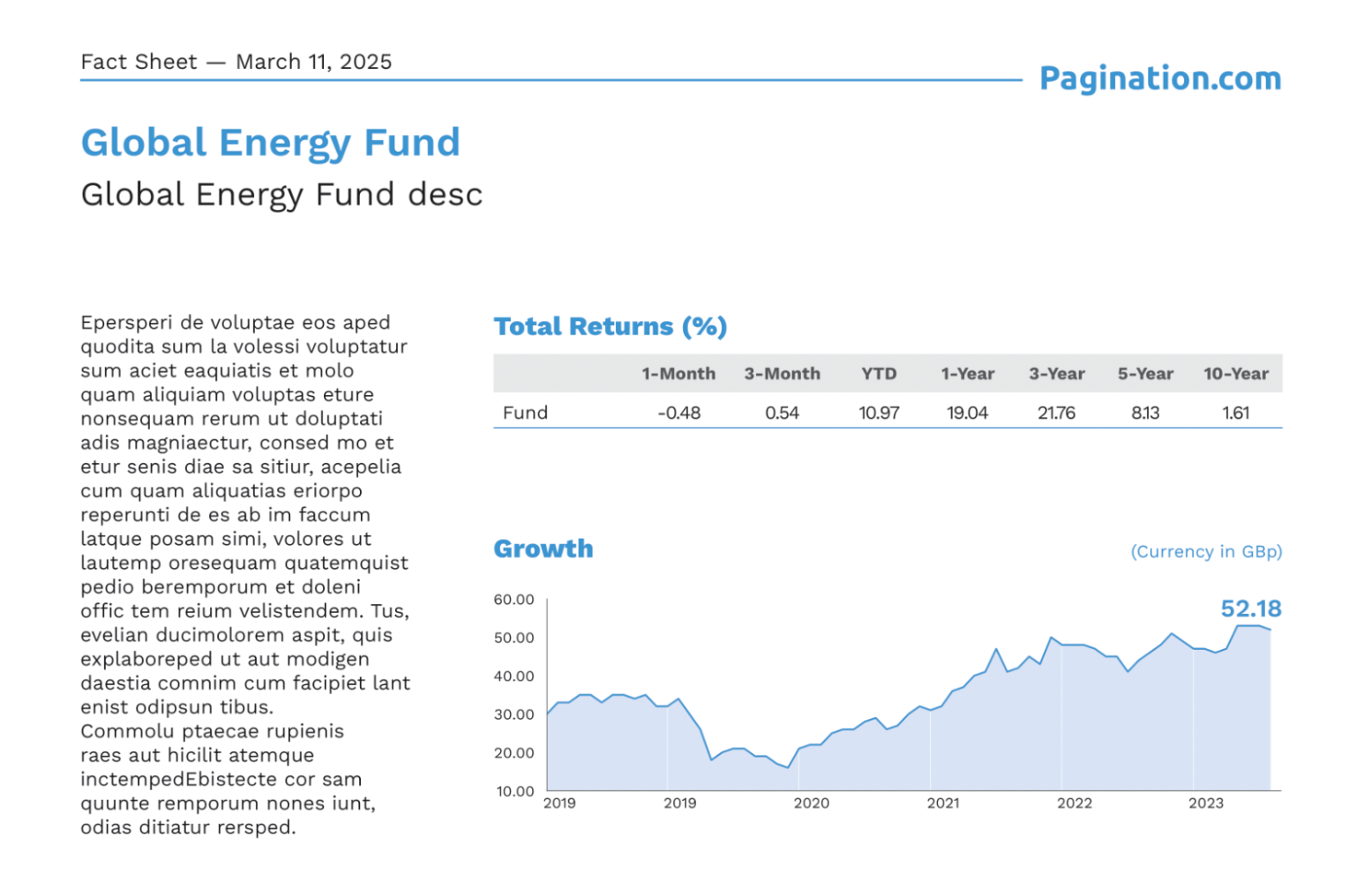
A fund fact sheet is your go-to resource for getting a quick yet comprehensive overview of a fund’s profile, historical performance, and investment strategy. Unlike the prospectus, it’s not legally required, but it plays an invaluable role in marketing and keeping investors informed.
Fund fact sheet components are:
- Fund name, ISIN code, and share class information
- Investment objectives and strategy explanation
- Historical performance charts and graphs
- SRRI (Synthetic Risk and Reward Indicator) rating
- Asset allocation breakdown with visual representations
- Top holdings and sector exposure details
- Fee structure and ongoing charges breakdown
For instance, a global equity fund’s fact sheet might display a 3-year return graph, show a risk level of 5 out of 7, and include a colorful pie chart breaking down sector allocation across technology, healthcare, and financials, all neatly packaged in a single-page PDF.
Who Is It For?
Fund fact sheets are specifically designed for:
- Retail investors who are comparing different investment options
- Financial advisors seeking to recommend suitable products to their clients
- Distributors and sales agents who need quick-reference materials for presentations
The primary goal is to communicate essential facts in an intuitive, accessible manner—often incorporating visuals, icons, and straightforward language that anyone can understand.
Frequency and Format
Most asset managers refresh their fact sheets monthly or quarterly, ensuring they reflect the latest NAVs, performance data, and portfolio changes. These regular updates help maintain transparency and keep investors informed about how their money is being managed.
Typically distributed as PDFs or embedded directly in web portals, fact sheets follow highly standardized layouts that make it easy to compare different funds side by side.
Financial Prospectus vs Fund Fact Sheet: Main Differences
While both documents share the broader goal of informing investors, their differences are quite significant:
Purpose and Compliance
- The financial prospectus serves as a regulatory requirement that ensures legal compliance and full disclosure.
- The fund fact sheet functions as a marketing and communication tool designed to present information clearly and concisely.
Level of Detail
- A prospectus can run anywhere from 50 to 200+ pages, packed with in-depth data and comprehensive legal disclosures.
- A fact sheet is typically 1–2 pages, laser-focused on current performance and portfolio data.
Target Audience
- Prospectuses are written for professional investors, lawyers, and regulatory bodies.
- Fact sheets are tailored for retail investors and sales professionals.
Update Frequency
- Prospectuses are updated only when regulatory events require it.
- Fund fact sheets are refreshed monthly or quarterly with the latest data.
Use Cases
- Turn to the prospectus for thorough due diligence and regulatory validation.
- Use the fact sheet for quick investment comparisons and client communication.
Why Understanding Both Documents Matters
When you know how to read both a financial prospectus and a fund fact sheet, you get a much more complete picture of any investment opportunity. While the fact sheet gives you a quick snapshot of current fund characteristics, the prospectus dives deep into the fine print, revealing risks and legal structures that might not be visible elsewhere.
Together, these documents support both speed and depth in your investment evaluation process, allowing you to screen opportunities quickly, then analyze them thoroughly when something catches your interest.
Automating Fund Fact Sheet Creation: Why It Matters
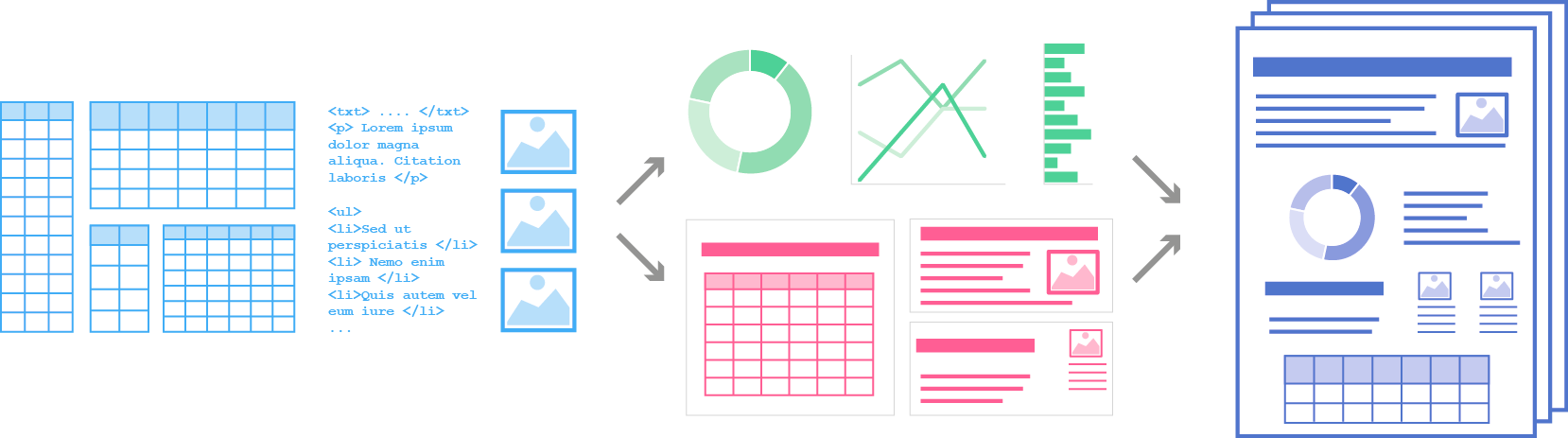
For asset managers, manually producing fund fact sheets every month or quarter represents a massive operational challenge. Teams must extract performance data, format content, update visuals, and ensure brand and regulatory consistency across multiple documents—often in several languages.
With Pagination, you can automate this entire process seamlessly. Our cloud-based solution connects directly to your Excel files and populates fully branded InDesign templates automatically. This ensures your fund fact sheets are always accurate, delivered on time, and ready for distribution, without the headaches of manual formatting or versioning issues.
Leading firms like Ninepoint Partners trust Pagination to scale their production, reduce operational risk, and maintain design consistency across hundreds of funds.
Discover more about Pagination’s Fund Fact Sheet Software and how it can transform your investor communication strategy.
FAQ – Financial Prospectus and Fund Fact Sheet
What is a financial prospectus used for?
A financial prospectus is used to disclose all legally required information about a security or fund offering. It ensures complete transparency and regulatory compliance during public offerings such as IPOs or new fund launches.
What is a fund fact sheet?
A fund fact sheet is a concise summary of a mutual fund or ETF’s performance, strategy, fees, and risk level. It’s primarily a marketing tool designed to help investors quickly compare different funds.
What is the difference between a prospectus and a fact sheet?
A prospectus is a comprehensive, legally binding disclosure document required by regulators, while a fact sheet is a brief, marketing-oriented summary that’s updated regularly for investor communication.
Is a prospectus legally required?
Yes, absolutely. A financial prospectus is legally required for public offerings of securities and must receive approval from the relevant financial authority before distribution.
Can I invest using only a fact sheet?
While fact sheets are incredibly helpful for initial comparisons, they don’t contain all the necessary risk disclosures. Serious investors should always consult the official prospectus before making any investment decisions.
