Regional price books at full scale
Novo Building Products publishes regional price books at enterprise scale. Product data from a PIM and commercial data from an ERP feed one automated InDesign workflow.
At enterprise scale, the hard part is rarely one catalog. It is the hundreds of documents behind it: price lists, data sheets, labels, all built in several languages from data that changes every week. Keep doing that by hand and versions drift apart, deadlines slip, and skilled people spend their days moving data between systems.
Pagination closes that gap. Your product data goes in, and print-ready InDesign files and PDFs come out, on demand.
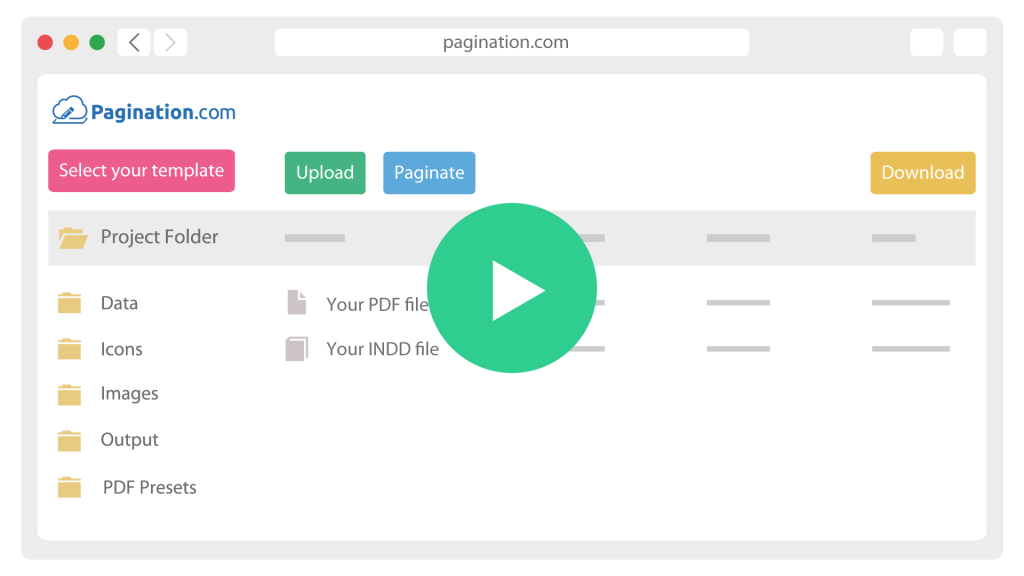




A clean split of responsibilities: your data team owns the data, your design team owns the templates, and neither waits on the other.
Connect your data
Pagination reads data from your PIM, ERP or DAM through API, webhook, channel publishing or scheduled export.

Map it to your template
Your existing InDesign layout becomes the template. Business rules, product hierarchy and regional formatting are applied as the data flows in.

Generate at scale
Documents are produced in batch and pushed back to your DAM with metadata and versioning. When the source data changes, every affected document is regenerated.
Many document tools work well for small catalogs, but slow down when product volume, asset volume and edition logic increase. Pagination is built for scalable document generation, where large jobs are split across multiple rendering instances and processed in parallel. This allows enterprise teams to generate large publications without blocking the queue or waiting for a single rendering process to finish.
Pagination supports enterprise publishing workflows such as:

The same engine produces the documents your customers, distributors and regulators expect to see:
Enterprise document automation needs to fit IT and security requirements, not work around them.


Enterprise automation is not only about the software. It also requires real project work: mapping data to templates, connecting systems, testing outputs and managing exceptions before the workflow goes live.
For enterprise projects, Pagination can assign a dedicated catalog automation specialist to support your team during rollout, from data mapping and integration coordination to InDesign template logic, production testing and issue resolution at publishing scale.
Regional price books at full scale
Novo Building Products publishes regional price books at enterprise scale. Product data from a PIM and commercial data from an ERP feed one automated InDesign workflow.
Pagination sits downstream of the systems your business already uses. It turns data from your stack into finished InDesign and PDF documents.
| System | What Pagination does with it |
|---|---|
| PIM Product Data | PIM integrations connect attributes, descriptions, translations, categories and asset references. Plytix, Salsify, Sales Layer, Akeneo, Pimcore… |
| ERP Commercial Data | ERP integrations map pricing, stock levels, order data and market-specific rules into documents. SAP, NetSuite, Epicor, Oracle… |
| DAM Assets | DAM integrations pull images into layouts and push finished PDFs and InDesign files back with metadata. Cloudinary, THRON, Canto… |
| CMS Content | Bring marketing copy and structured content into catalogs, brochures and data sheets. WordPress, Contentful, Drupal… |
| E-commerce Storefront data | Use customer-facing prices, availability and descriptions to generate aligned PDFs. Shopify, Magento, BigCommerce, WooCommerce… |
Publishing a catalog or a price list is a demanding job, even for a strong marketing team. At enterprise volume, across markets and systems, it is harder still, and it is exactly what Pagination is built for.
The quickest way to find out if it fits is to start from what you already have: your InDesign file, a sample of your data and a reference PDF. From there we can assess feasibility for your specific stack and scale.